






Zoom the image with the mouse
Cobham
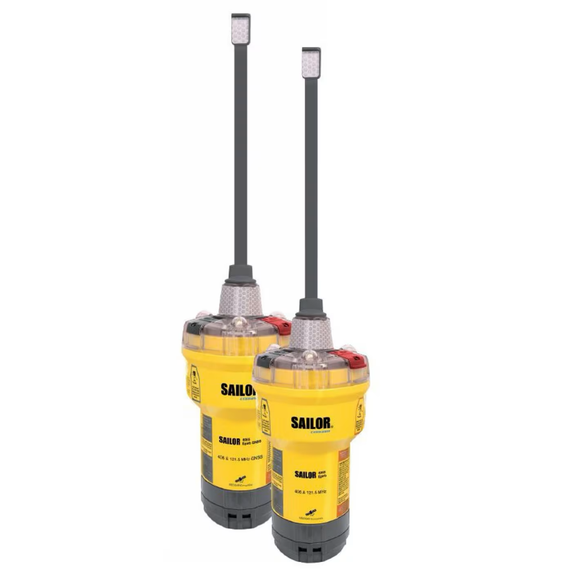
Cobham SAILOR 4065 Emergency Positioning Indicating Radio Beacon, GNSS/AIS - Automatic Housing
Product Code:
404065F-00500
Condition:
New
Weight:
8.60 KGS
Width:
21.50
(cm)
Height:
16.00
(cm)
Depth:
49.00
(cm)
$950.00
An EPIRB is used to alert search and rescue services in the event of an emergency. It does this by transmitting a coded message on the 406 MHz distress frequency via satellite and earth stations to the nearest rescue coordination centre. Some EPIRBs also have built-in GPS, which enables the rescue services to accurately locate you to ±50 metres.
406 MHz EPIRBs work with the Cospas-Sarsat polar orbiting satellite system, giving true global coverage. There is an alert delay of about 45 minutes, dependent on when the satellites come into view on the horizon with the current LEOSAR and GEOSAR constellations. With the new MEOSAR constellation, which is currently being installed, the goal is to achieve instantaneous detection. The MEOSAR constellation is up and running, with the full system working by 2021.
The messages sent from the beacon are coded messages that allow the receiving rescue authorities to identify the vessel to which the beacon belongs. The additional information attached to the vessel, such as emergency contact information, can then be accessed via the registered details.
This allows the rescue authorities to get in touch with the relevant parties to determine whether the alert is false or genuine. Most EPIRBs include a 121.5 MHz frequency, which is used for “homing” purposes. When the rescue services are in the region, this frequency allows them to determine the direction of the signal.
| Technical Specifications | ||
| 406 MHz transmitter | Frequency | 406.040 MHz + 1 kHz |
| Power output | 5 W nominal | |
| Modulation | Phase (16K0G1D) | |
| 121.5 MHz transmitter |
Frequency | 121.5 MHz ± 3.5 kHz |
| Power output | 100 mW nominal | |
| Modulation | Swept tone AM (3K20A3X) | |
| GNSS receiver (Note 1) | Constellations | GPS, GLONASS, Galileo |
| Frequencies | 1575.42 MHz (GPS, Galileo) 1602.00 MHz (GLONASS) |
|
| Sensitivity | -167 dBm minimum | |
| Satellites tracked | 72 channel | |
| Strobe light | Type | 3 high intensity LEDs |
| Light output | 0.2 cd minimum | |
| Flash rate | 23 flashes per minute | |
| Battery | Type | Lithium iron disulphide |
| Operating life | 48 hours minimum | |
| Shelf life (In Service Life) | 10 years typical in service (see note 2) | |
| Environment | Operating temperature | -20°C to +55°C (-4° F to +131° F) |
| Storage temperature | -30°C to +70°C (-22° F to +158° F) | |
| Automatic release depth | 4 m maximum | |
| Dimensions (EPIRB) |
Weight | 710 g |
| Height/Width/Depth | 425 x 105 x 105 mm (incl. antenna) | |
| Length of antenna | 225 mm | |
| Dimensions (Manual bracket) |
Weight | 110 g |
| Height/Width/Depth | 135 x 125 x 125 mm | |
| Dimensions (Float free enclosure) |
Weight | 1075 g |
| Height/Width/Depth | 415 x 135 x 135 mm | |
| COSPAS-SARSAT | C/S T.001 C/S T.007 | |
| Europe | MED (wheelmark) | |
| USA | USCG & FCC FCC ID: TBA 47 CFR Parts 80, 2 Dependant on variant |
|
| Standards Applied (Note 3) | International standards | IEC 61097-2 IEC 60945 incl. Corrigendum1 IEC 61108-1 (GNSS variant) RTCM 11000.4 Industry Canada RSS-287 AS/NZS 4280.1 IMO MSC/Circ. 862 |
| IMO regulations | A.662(16); A.694(17); A.810(19); A.814(19) |
|
| Note 1: GNSS is available on the SAILOR 4065 EPIRB – GNSS – Manual and the SAILOR 4065 EPIRB – GNSS – Automatic versions only Note 2: As a responsible manufacturer, Cobham SATCOM recommends a 5-year health check at the nearest approved service agent. Shore-based maintenance mandated vessels, battery health check or replacements should be carried out in accordance with flag Administration requirements and not exceeding 5 years. Note 3: Approvals for the various standards are pending |
||
5 customers are viewing this product
Details
An EPIRB is used to alert search and rescue services in the event of an emergency. It does this by transmitting a coded message on the 406 MHz distress frequency via satellite and earth stations to the nearest rescue coordination centre. Some EPIRBs also have built-in GPS, which enables the rescue services to accurately locate you to ±50 metres.
406 MHz EPIRBs work with the Cospas-Sarsat polar orbiting satellite system, giving true global coverage. There is an alert delay of about 45 minutes, dependent on when the satellites come into view on the horizon with the current LEOSAR and GEOSAR constellations. With the new MEOSAR constellation, which is currently being installed, the goal is to achieve instantaneous detection. The MEOSAR constellation is up and running, with the full system working by 2021.
The messages sent from the beacon are coded messages that allow the receiving rescue authorities to identify the vessel to which the beacon belongs. The additional information attached to the vessel, such as emergency contact information, can then be accessed via the registered details.
This allows the rescue authorities to get in touch with the relevant parties to determine whether the alert is false or genuine. Most EPIRBs include a 121.5 MHz frequency, which is used for “homing” purposes. When the rescue services are in the region, this frequency allows them to determine the direction of the signal.
| Technical Specifications | ||
| 406 MHz transmitter | Frequency | 406.040 MHz + 1 kHz |
| Power output | 5 W nominal | |
| Modulation | Phase (16K0G1D) | |
| 121.5 MHz transmitter |
Frequency | 121.5 MHz ± 3.5 kHz |
| Power output | 100 mW nominal | |
| Modulation | Swept tone AM (3K20A3X) | |
| GNSS receiver (Note 1) | Constellations | GPS, GLONASS, Galileo |
| Frequencies | 1575.42 MHz (GPS, Galileo) 1602.00 MHz (GLONASS) |
|
| Sensitivity | -167 dBm minimum | |
| Satellites tracked | 72 channel | |
| Strobe light | Type | 3 high intensity LEDs |
| Light output | 0.2 cd minimum | |
| Flash rate | 23 flashes per minute | |
| Battery | Type | Lithium iron disulphide |
| Operating life | 48 hours minimum | |
| Shelf life (In Service Life) | 10 years typical in service (see note 2) | |
| Environment | Operating temperature | -20°C to +55°C (-4° F to +131° F) |
| Storage temperature | -30°C to +70°C (-22° F to +158° F) | |
| Automatic release depth | 4 m maximum | |
| Dimensions (EPIRB) |
Weight | 710 g |
| Height/Width/Depth | 425 x 105 x 105 mm (incl. antenna) | |
| Length of antenna | 225 mm | |
| Dimensions (Manual bracket) |
Weight | 110 g |
| Height/Width/Depth | 135 x 125 x 125 mm | |
| Dimensions (Float free enclosure) |
Weight | 1075 g |
| Height/Width/Depth | 415 x 135 x 135 mm | |
| COSPAS-SARSAT | C/S T.001 C/S T.007 | |
| Europe | MED (wheelmark) | |
| USA | USCG & FCC FCC ID: TBA 47 CFR Parts 80, 2 Dependant on variant |
|
| Standards Applied (Note 3) | International standards | IEC 61097-2 IEC 60945 incl. Corrigendum1 IEC 61108-1 (GNSS variant) RTCM 11000.4 Industry Canada RSS-287 AS/NZS 4280.1 IMO MSC/Circ. 862 |
| IMO regulations | A.662(16); A.694(17); A.810(19); A.814(19) |
|
| Note 1: GNSS is available on the SAILOR 4065 EPIRB – GNSS – Manual and the SAILOR 4065 EPIRB – GNSS – Automatic versions only Note 2: As a responsible manufacturer, Cobham SATCOM recommends a 5-year health check at the nearest approved service agent. Shore-based maintenance mandated vessels, battery health check or replacements should be carried out in accordance with flag Administration requirements and not exceeding 5 years. Note 3: Approvals for the various standards are pending |
||
Related Products


